
CITY TO SUMMIT: Why the True Experience of Mount Fuji Begins at the Town’s Edge
November 19, 2026
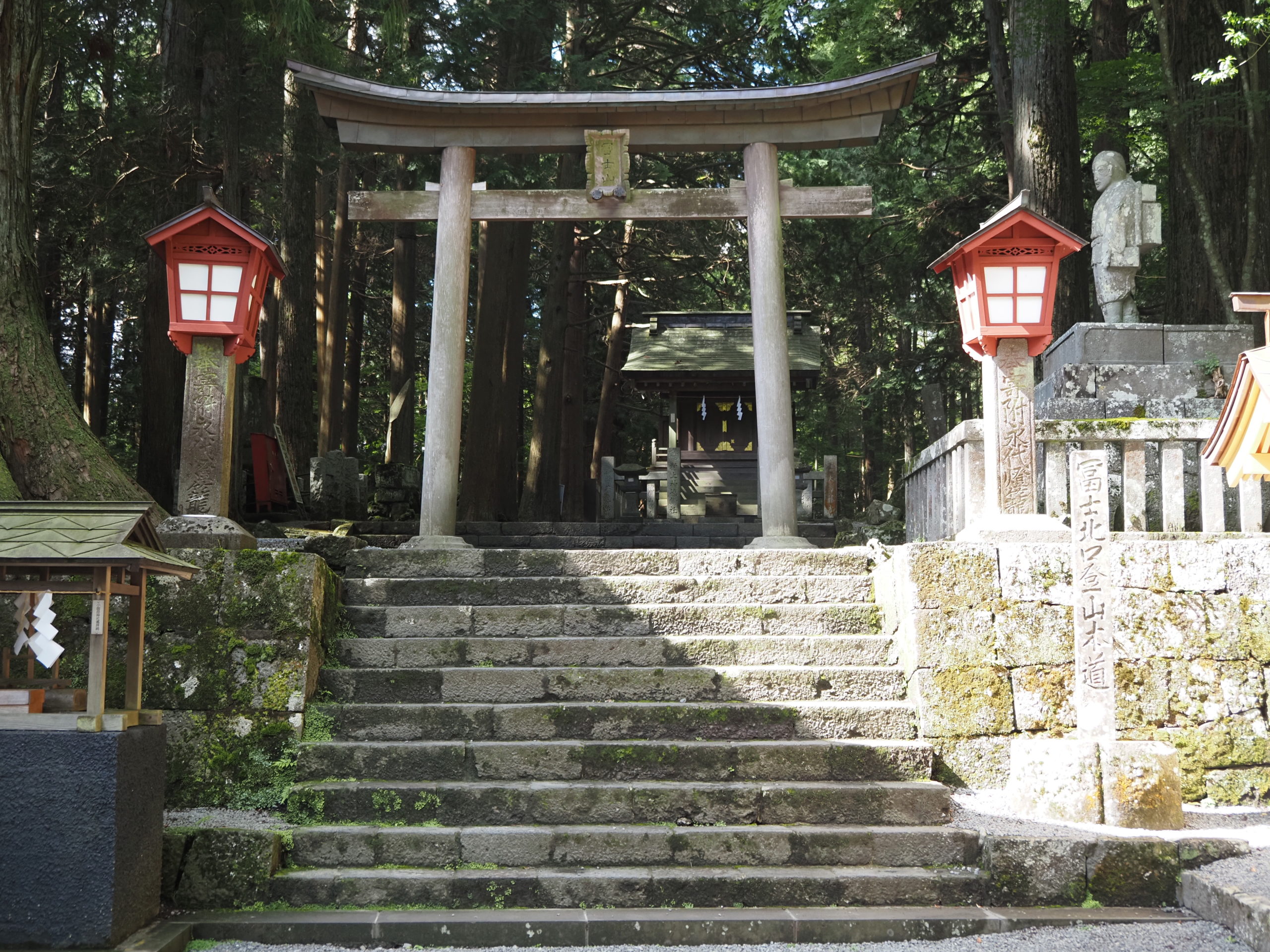
From the streets of Fujiyoshida to the summit of Mount Fuji, connect with the mountain’s history, landscapes, and living culture along the way.
Getting to Know Mount Fuji, Step by Step
After guiding people on Mount Fuji for many years, we have come to appreciate how much there is to discover before you reach the summit.
The journey can begin in Fujiyoshida, a town whose history is closely tied to the mountain. You can visit a shrine where pilgrims once prayed before their ascent, walk through the forests at the foot of Fuji, and learn how local families welcomed worshippers travelling from across Japan.
As you climb higher, the landscape changes. The trees become sparse, the ground grows rocky, and the mountain begins to feel like a different world.
Each part of the journey has its own character. When we walk from the town to the summit, these places and experiences become connected.
This is the idea behind CITY TO SUMMIT, a vision we are developing at JIN Tours. We want people to experience Mount Fuji as a whole, from the communities at its foot to the volcanic landscape at the top.
How the Way We Climb Mount Fuji Has Changed
A Mountain of Pilgrimage
For centuries, Mount Fuji has attracted people who came to pray, practise asceticism, and seek a deeper connection with the mountain.
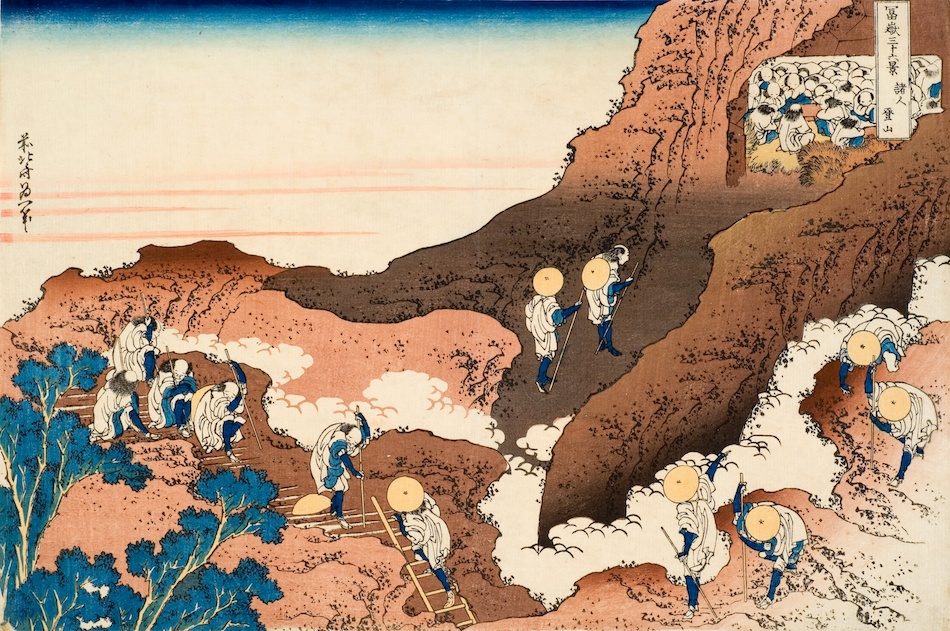
During the Edo period(1603–1868), Fuji-kō—religious groups devoted to Mount Fuji—became popular among people living in Edo, present-day Tokyo. Many travelled to the mountain together, following established routes and taking part in rituals along the way.
The pilgrimage involved much more than the ascent itself. People stayed in the foothill towns, received guidance from local religious practitioners, and visited shrines and other sacred places before climbing.
The mountain was part of a wider cultural landscape. Its trails, forests, villages, and places of worship all played a role in the journey.
The Road to the Fifth Station
Mount Fuji gradually became a destination for modern tourism and mountaineering. Roads and transport made the mountain easier to reach, and the opening of the Fuji Subaru Line in 1964 brought vehicles to the Fifth Station on the Yamanashi side.
For many visitors, this changed the starting point of the climb. Instead of beginning in Fujiyoshida and walking through the lower forest, they could travel directly to the Fifth Station and start climbing from there.
Today, this is how most people approach the Yoshida Trail. It is practical, especially for visitors with limited time, and it gives climbers access to the higher mountain.
The COVID-19 pandemic brought an unprecedented interruption to climbing tourism in 2020, when the regular climbing season was suspended.
Since then, conversations about the future of Mount Fuji have increasingly included questions of safety, visitor management, environmental protection, and the quality of the visitor experience. Seasonal access controls, including visitor numbers and time, and mountain entrance fees have also become part of this changing landscape.
In recent years, we have also seen more interest in different ways of experiencing Fuji. Some visitors come to watch the stars, explore the lower trails, learn about the old pilgrimage routes, or spend time in the foothill communities. Some choose a route that does not include the summit.
These changes are part of the mountain’s continuing story. They also give us a chance to think about what we want our experience of Mount Fuji to include.
We see these developments as an opportunity to ask a question:
How can we help people experience the true, multi-layered soul of Mt. Fuji beyond just reaching the summit?
For us, the answer begins by reconnecting the foothills with the summit.
Reconnect with Mount Fuji
Starting at the Fifth Station makes it possible to climb Mount Fuji within a shorter period. However, it also means that we pass over much of the landscape that once formed the beginning of the pilgrimage.
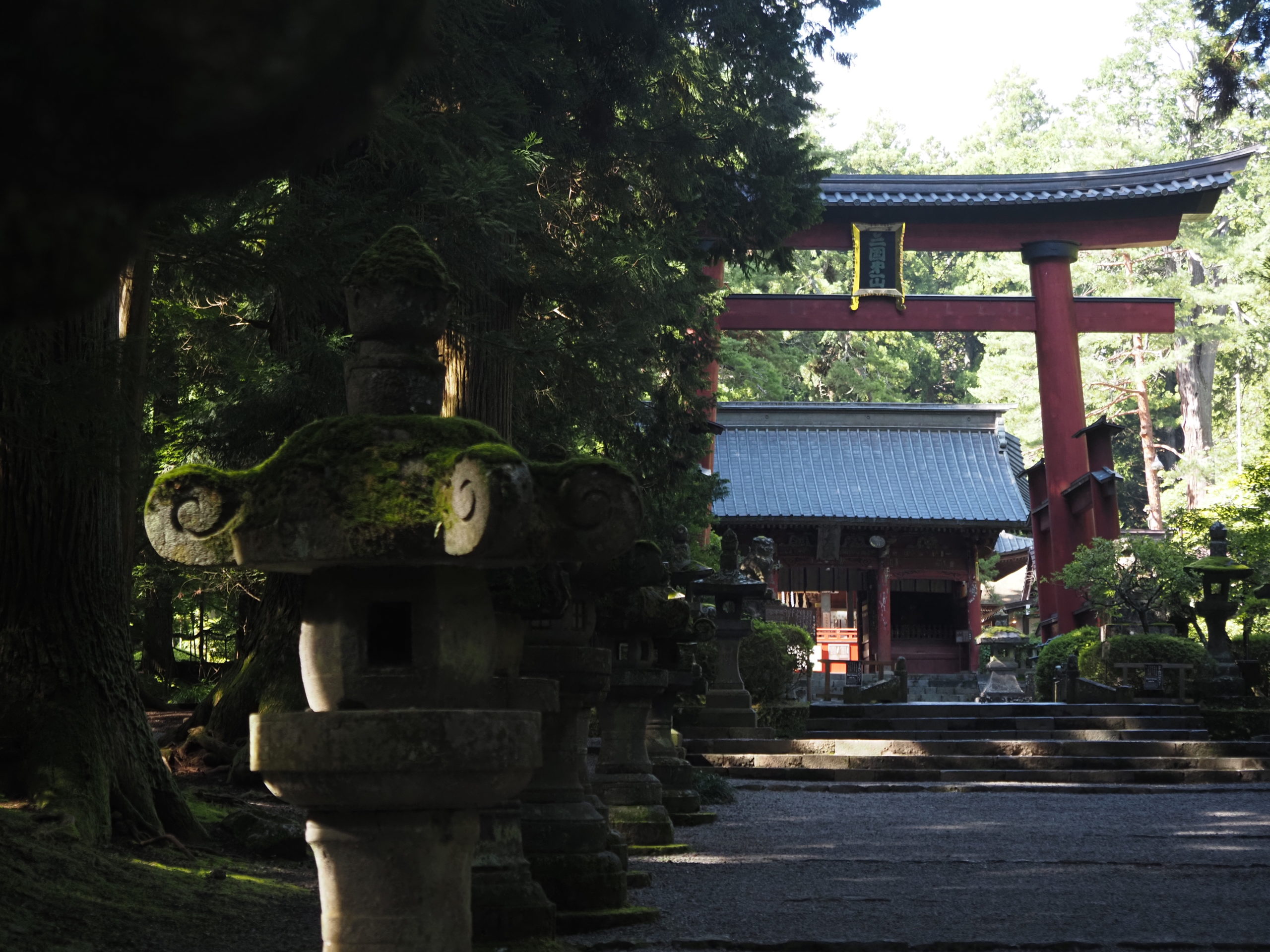
Imagine starting your journey at Kitaguchi Hongu Fuji Sengen Shrine in Fujiyoshida. The shrine stands among tall trees, with a broad approach leading towards its sacred grounds. For generations, people have visited this place to pray to the deity associated with Mount Fuji.
From there, the historic Yoshida Trail leads towards the mountain. The lower route passes through woodland, with traces of the old pilgrimage still visible along the way.
As you continue upwards, the environment changes gradually. You leave the town behind, walk through the forest, and eventually reach the more exposed volcanic slopes.
Walking this route takes time, but it helps you understand the mountain’s scale. You can feel the distance between everyday life in the foothills and the summit high above.
There is also a human story along the way. The people who lived here developed ways to welcome pilgrims, prepare for climbing seasons, and make a living in a landscape shaped by the mountain.
These stories are easy to miss when we see the Fifth Station as the beginning of the climb.
Discover the World at the Foot of Mount Fuji
The area around Mount Fuji has its own history, traditions, and everyday life. Here are some of the places and experiences that help us understand the mountain from the ground up.
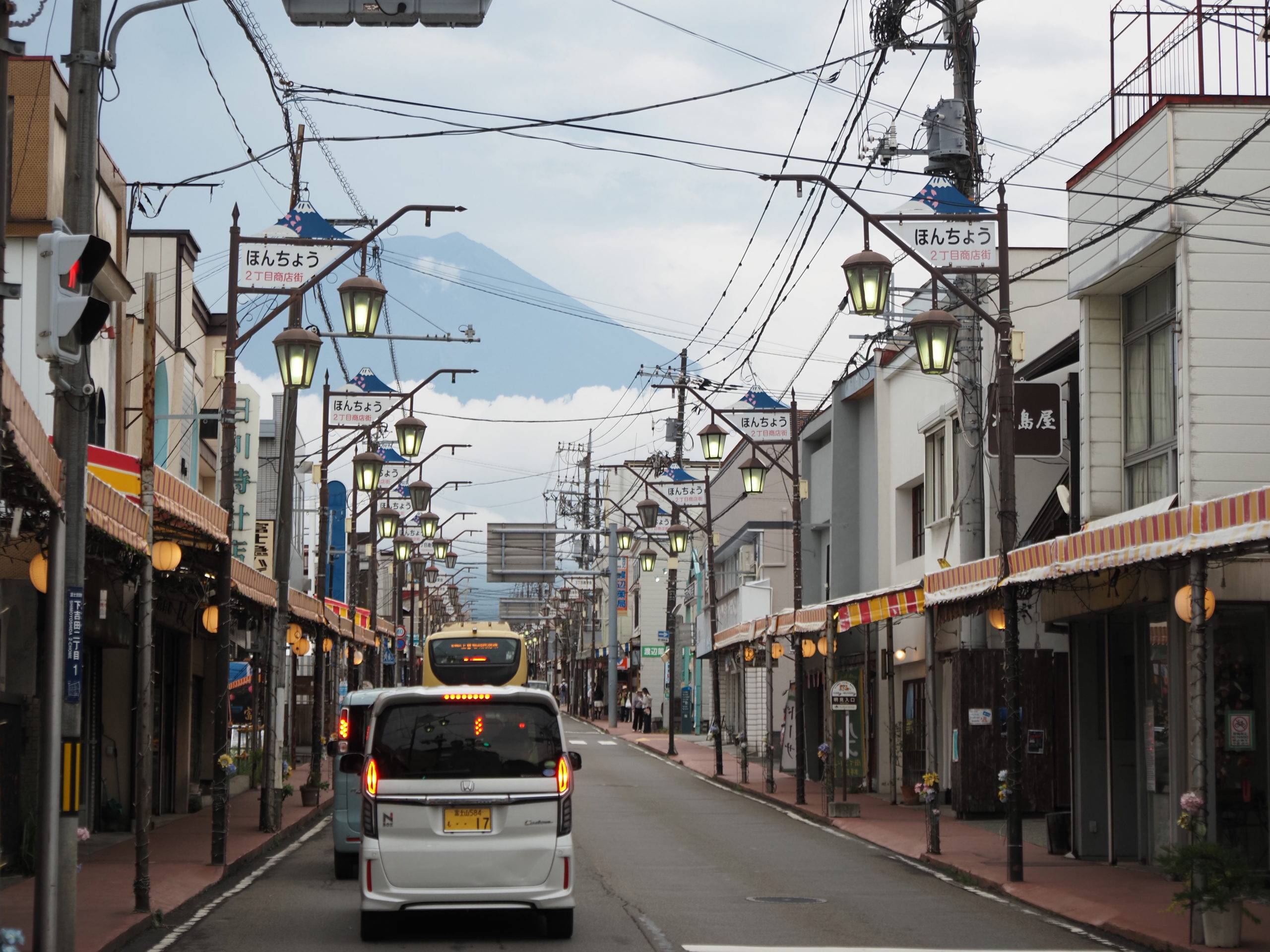
Fujiyoshida City: The Gateway Town of Mount Fuji
Fujiyoshida grew alongside the religious and cultural life of Mount Fuji. Its two historic districts, Kamiyoshida and Shimoyoshida, offer different glimpses into the relationship between the mountain and the people who live here.
In Kamiyoshida, the old pilgrimage route and Oshi houses tell the story of visitors who came to worship at Fuji. Oshi were religious practitioners who helped pilgrims prepare for their journey, offering guidance, accommodation, and hospitality.
In Shimoyoshida, the textile industry shaped the town’s working life. The area became known for its textile production, supported in part by the local water supply and the skills passed down through generations.
You can still find this heritage in the town today, alongside small factories, shops, restaurants, and neighbourhoods where people continue their daily lives.
Food tells part of the story, too. Yoshida udon, known for its firm noodles, developed in a local working culture closely associated with the textile industry.
And each August, the Yoshida Fire Festival brings the community together. With a history of more than 400 years, the festival is traditionally associated with prayers for protection from volcanic eruptions. It also marks the close of the Mount Fuji climbing season.
These traditions show how deeply the mountain is woven into local life.
Learn more details about Fujiyoshida City→
Shrines, Oshi Houses, and the Old Pilgrimage Route
Kitaguchi Hongu Fuji Sengen Shrine is one of the most important places to visit when exploring Mount Fuji’s pilgrimage history. For many people travelling along the Yoshida route, it was a place to pray before beginning the ascent.
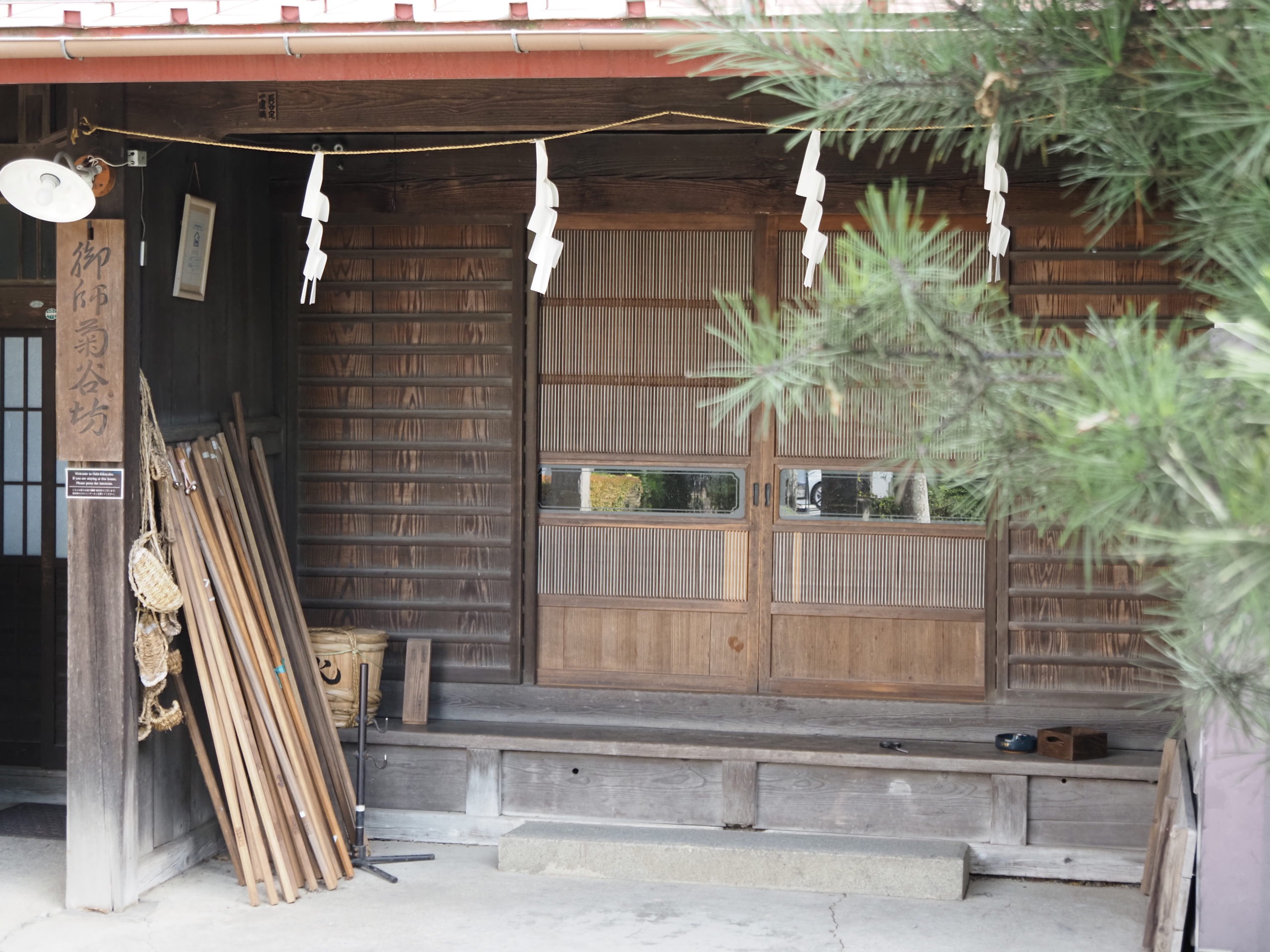
The historic Oshi houses provide another perspective. They were places where pilgrims could stay and prepare for their climb, and where religious traditions were passed on. Ooganmaru and Oshi-Kikuya are one example of this heritage.
Further along the foothills, places such as Omuro Sengen Shrine and Funatsu Tainai Jukei reveal other aspects of local belief. Tainai caves, formed by volcanic activity, were used in religious practices associated with purification and rebirth.
The surrounding forests, lava formations, lakes, and springs also belong to the wider cultural landscape of Mount Fuji.
Exploring these places helps us see why Mount Fuji was recognised as a World Heritage site through a collection of related places, including shrines, pilgrimage routes, Oshi houses, and natural features.
The mountain’s significance extends far beyond its summit.
Learn more details about Oshi house→
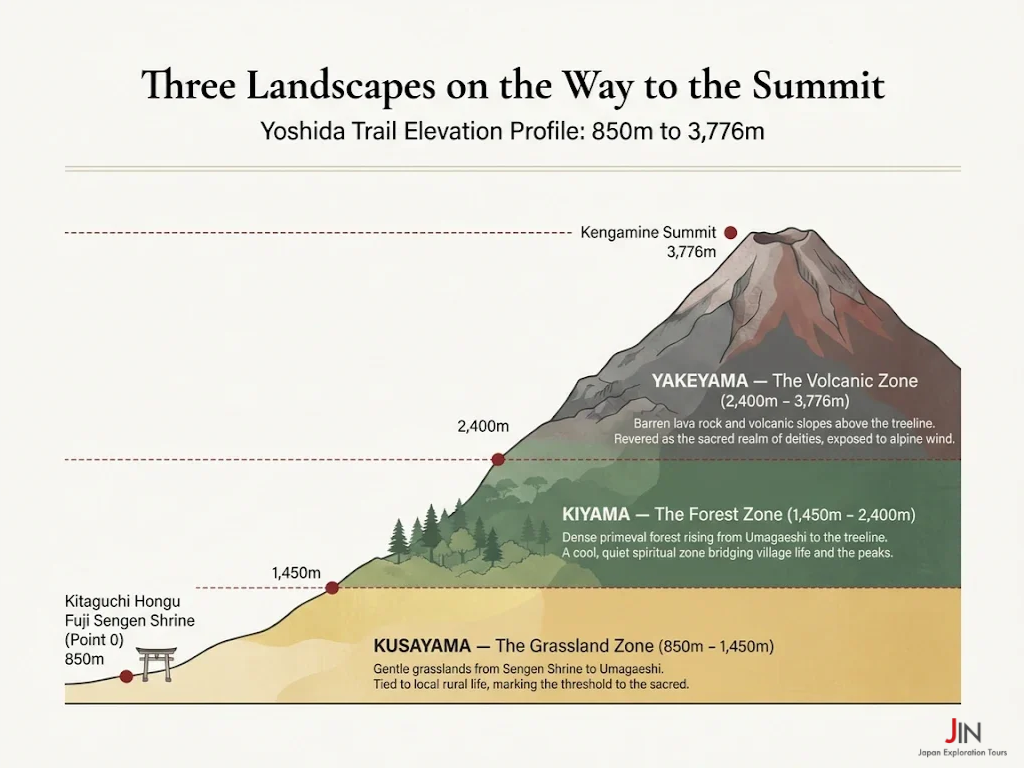
Three Landscapes on the Way to the Summit
One of the most striking things about climbing Mount Fuji from the foothills is the way the landscape changes as you gain altitude.
Starting from Kitaguchi Hongu Fuji Sengen Shrine, the “Point 0” of the Yoshida Trail at an elevation of approximately 850 meters (2,789 ft), this climbing route gains about 2,900 meters (9,514 ft) in elevation to reach the summit of Kengamine, which rises to 3,776 meters (12,388 ft).
A traditional way of describing the mountain divides it into three zones: Kusayama, Kiyama, and Yakeyama. These names refer broadly to grassland, forest, and exposed volcanic terrain.
Kusayama — The Grassland Zone (850m→1,450m / 2,789 ft → 4,757 ft)
The lower mountain includes grasslands and open areas shaped by the local climate and human activity.
Here, the mountain is still closely connected to the surrounding countryside. Paths pass through vegetation, and the landscape feels familiar to anyone who has spent time walking in rural Japan.
The lower slopes have long supported the lives and work of local communities. Their character is an important part of the journey.
Kiyama — The Forest Zone (1,450m→2,400m / 4,757 ft → 7,874 ft)
Higher up, the trail enters the forest.
On the Yoshida Trail, you can spend hours walking beneath trees, with changing light, forest sounds, and cooler air around you. The pace of the climb becomes part of the experience.
This section also helps explain why the old route feels different from starting at the Fifth Station. You experience a gradual transition from the foothills into the mountain environment.
The forest is a world of its own, and it has long formed part of the spiritual landscape of Mount Fuji.
Yakeyama — The Volcanic Zone (2,400m→3,776m / 7,874 ft → 12,388 ft)
Above the forest, the landscape changes dramatically. Trees become scarce, and the ground is increasingly covered with volcanic rock and loose material.
The mountain feels more exposed here. Weather, temperature, wind, and the physical effort of climbing become more noticeable.
This is the landscape most people associate with Mount Fuji’s upper slopes. Yet when you arrive after walking through the grassland and forest below, the contrast is especially clear.
You have travelled through several distinct environments, each with its own atmosphere.
Why the Summit Was Seen as Another World
For many people who climbed Mount Fuji as a religious pilgrimage, reaching the upper mountain meant entering sacred territory.
In Fuji-kō traditions, the summit and the volcanic landscape above the forest were associated with the spiritual world. Some historical accounts describe the upper mountain in terms of a paradise beyond the ordinary world.
The climb itself could therefore be understood as a transition. Pilgrims left their everyday surroundings, passed through forests and changing landscapes, and eventually reached a place with deep religious meaning.
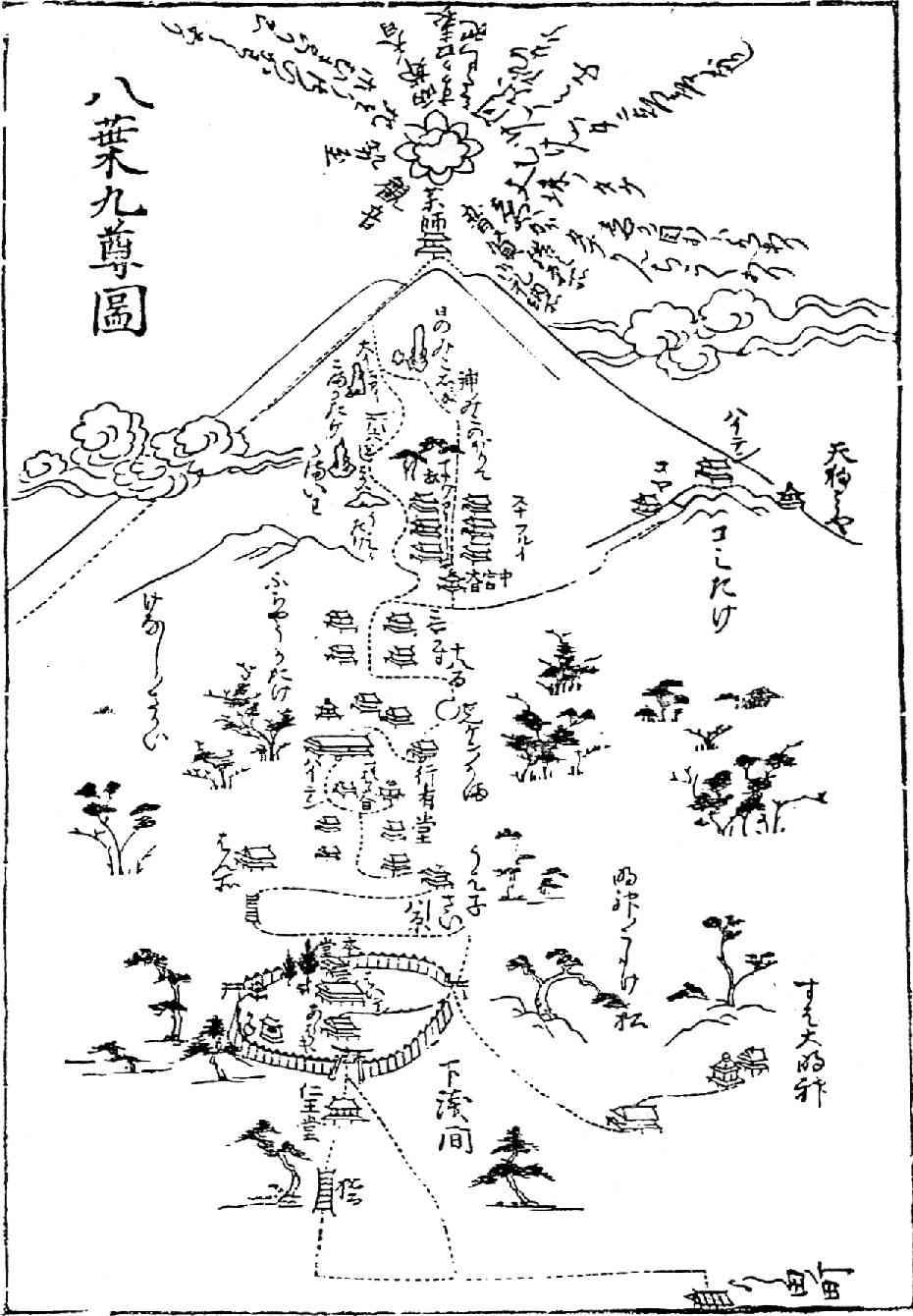
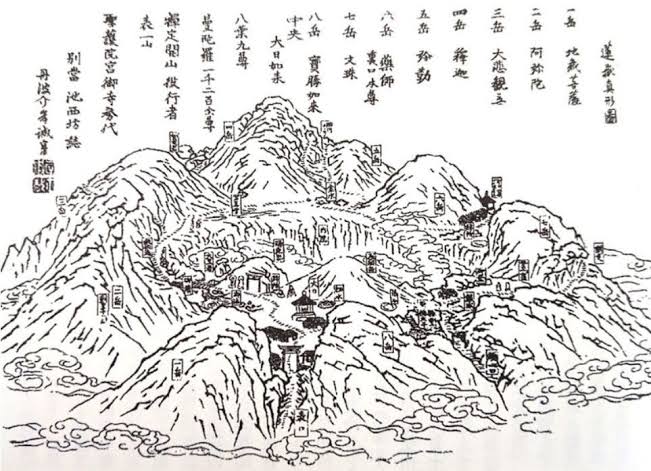
The summit crater, too, held spiritual significance. Its peaks became associated with the Buddhist concept of Hachiyo Renge*, linking the shape of the mountain to religious imagery.
Hachiyo Renge*: Refers to an eight-petaled lotus, which holds deep religious significance representing the spiritual heart or the core of the mandala. It is also linked to sacred sites of the eight peaks at the summit of Mount Fuji.
These ideas belonged to particular traditions and periods, and beliefs varied among practitioners. Still, they offer an important way to understand why people made the journey.
When we walk up Mount Fuji today, we can still experience a physical version of that transition. The air grows thinner, the vegetation disappears, and the familiar world of the foothills feels increasingly distant.
The mountain changes around us, and our own perspective can change along with it.
What CITY TO SUMMIT Means to Us at JIN Tours
At JIN Tours, we want to create more opportunities to experience these different sides of Mount Fuji.
We offer experiences with local guides who know the mountain and its surrounding communities. We believe their knowledge can help visitors understand what they see along the way, from the history of the pilgrimage routes to the realities of climbing at high altitude.
CITY TO SUMMIT brings together several kinds of experiences.
Exploring the Foothills
A visit to Mount Fuji can begin in the towns and villages at its foot. We can explore historic shrines, learn about Oshi houses, discover local food, and meet people whose lives are connected to the mountain.
These experiences give context to the climb and help visitors appreciate the region beyond its famous views.
Following the Pilgrimage Tradition
The old pilgrimage routes offer another way to approach Mount Fuji. Walking along them, visiting sacred sites, and learning about the people who once guided pilgrims can bring the mountain’s religious history into focus.
The aim is to understand how the journey developed and why these places mattered to the people who travelled here.
Walking from the City to the Summit
For those who want to experience the full journey, CITY TO SUMMIT connects the foothills with the summit itself.
Starting lower on the mountain gives you time to observe how the landscape changes. You encounter the history of the region, walk through the forest, and continue into the volcanic terrain above.
It is a demanding journey that requires suitable preparation, enough time, and careful attention to weather and altitude. With the right planning and guidance, it can also be a deeply rewarding way to experience Mount Fuji.
Each part of the route adds something to the whole.
Creating New Possibilities Together
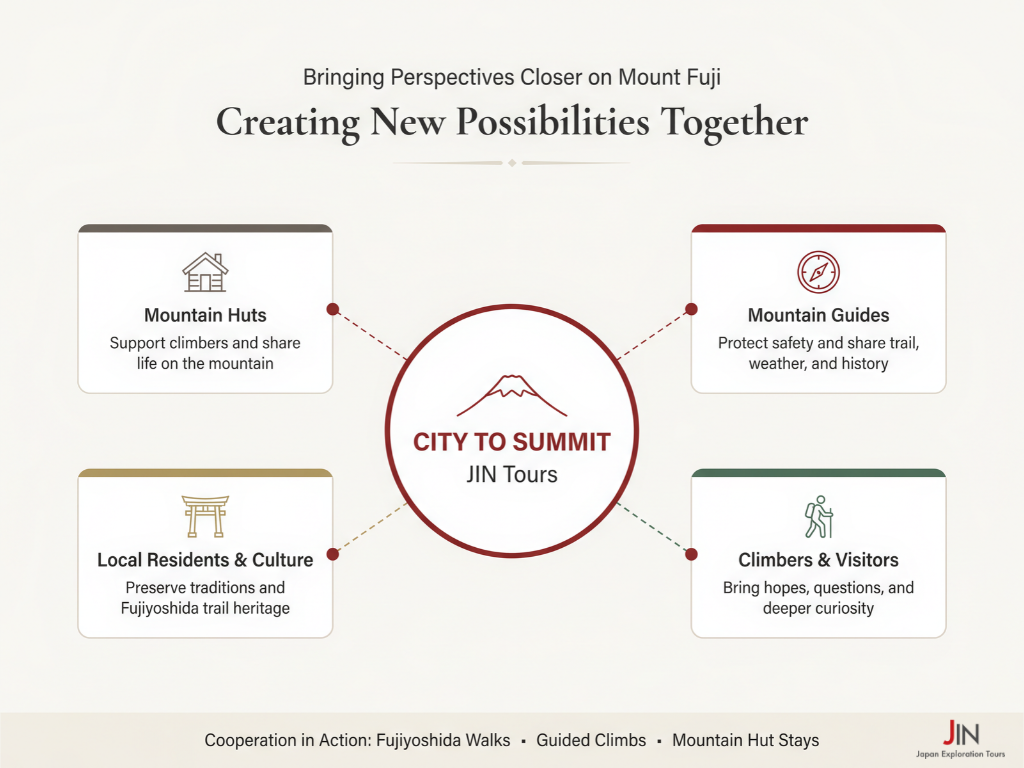
Mount Fuji is shared by many people and communities.
Mountain huts support climbers throughout the season. Local residents preserve cultural traditions and maintain businesses. Guides protect the safety and share their knowledge of the trails, the weather, and the mountain’s history. Climbers arrive with their own hopes, questions, and reasons for making the ascent.
Each group experiences Mount Fuji from a different perspective.
We believe there is room to bring these perspectives closer together. A visit to a mountain hut can become an opportunity to learn about life on the mountain. A walk through Fujiyoshida can help explain the history of the Yoshida Trail. A guided climb can introduce visitors to the landscape and the traditions that shaped it.
These connections take cooperation. Local communities, mountain huts, cultural practitioners, guides, and visitors all have a part to play.
At JIN Tours, we want to help build experiences that benefit from these relationships and encourage people to spend more time understanding Mount Fuji.
CITY TO SUMMIT is our way of exploring what that could look like. We will keep learning from the people who know this region, finding new ways to connect its places and stories, and developing tours that offer a fuller picture of the mountain.
Come and Experience Mount Fuji from the Ground Up
The summit is an extraordinary place to reach. But the journey leading to it has many stories of its own.
In Fujiyoshida, you can discover the communities that welcomed pilgrims. Along the old trail, you can walk through forests that have shaped the mountain experience for centuries. Higher up, you can watch the landscape open into the vast volcanic terrain of Mount Fuji.
We invite you to explore these places with us, meet the people who know them, and experience the mountain at your own pace.
Whether you are interested in local culture, the history of pilgrimage, or the challenge of climbing to the summit, we hope to help you discover a side of Mount Fuji that stays with you long after the journey ends.